
How do you get your news?
A core part of our mission as Charlottesville Inclusive Media is to strengthen our information “ecosystem,” including all the people and groups across our region who amplify and share local news and vital resources. They might work for traditional outlets, like newspapers, or write blogs or Substack newsletters, or even share information on a bulletin board at a community center.
In order to better understand how central Virginians access and share news, we started with Fluvanna, Louisa, Madison and Nelson counties. We partnered with the Charlottesville Area Community Foundation to work with the Listening Post Collective, a group that specializes in this sort of research, to create an information ecosystem assessment.
Listening Post Collective conducts these assessments across the nation, hiring local researchers to do surveys, interviews and information mapping.
“Our mission is to partner with communities on building responsive and resilient information ecosystems that reflect local news needs and pathways,” said Jesse Hardman, founder of Listening Post Collective.
“Some of that work is lifting up traditional news organizations, but it also means partnering with trusted information sharers who aren’t journalists. By listening to communities, we see how critical information actually moves, and can better lean into local needs.”
The Central Virginia Information Ecosystem Assessment launched Wednesday, April 8, the day before Local News Day, for those celebrating!
Local researchers Oliver Hale, Sue Frankel-Streit, Sharon Harris, Luna Cortes and Kristina (Ti) Stelling surveyed 316 community members, mapped 75 community information hubs and interviewed 13 local communications experts, including representatives from the NAACP, a the founder of a popular newsletter and the chair of a county Republican committee.
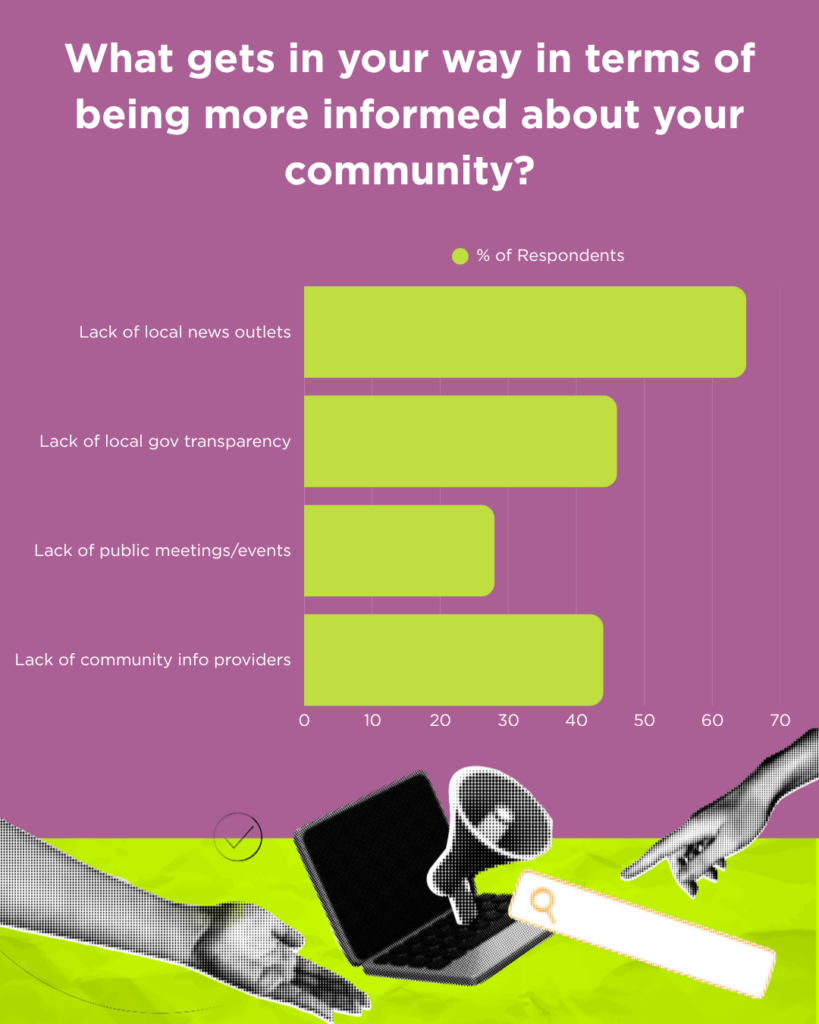
According to the report, people said the top barrier to accessing information was the lack of local news outlets, although residents are trying to fill these gaps with hyperlocal newsletters and Facebook groups. The primary ways respondents reported getting local news was by word-of-mouth through friends and family (55%), then Facebook (48%).
“I asked if there are any sources of news in the community that you don’t trust and they say Facebook. So I asked them where they get their news? Facebook. What do you not trust? Facebook. Maybe there’s a little bit of a problem here,” said Nelson County researcher Oliver Hale, who is quoted in the report.
“Almost every single person I talked to, regardless of age, except for maybe people who are under 20, they all said they get their news from Nelson Knows [Facebook Group].”
“It is interesting that a local newspaper like The Central Virginian has survived, and I think it survived because the Louisa community has a strong investment in their local newspaper,” said Mitch Sasser, editor of the paper, according to the report. He also emphasized the role of a rural editor as all-encompassing.
“I think the idea of an editor conjures up someone who leads their team of reporters and a little bit behind the scenes. But that’s not the reality I think as a rural editor. It’s like, ‘Oh, no, I’m kind of responsible for the content each week and responsible for delegating and making sure that there’s something that I can’t do that other people are doing it.”
And although outlets based in Charlottesville and Richmond sometimes cover the four counties, respondents said this coverage can be spotty and lack local context. County governments, despite being close to the issues, were found to be inconsistent about communication. Researchers found that there are hot-button issues that increase demand for local news, such as the construction of data centers.
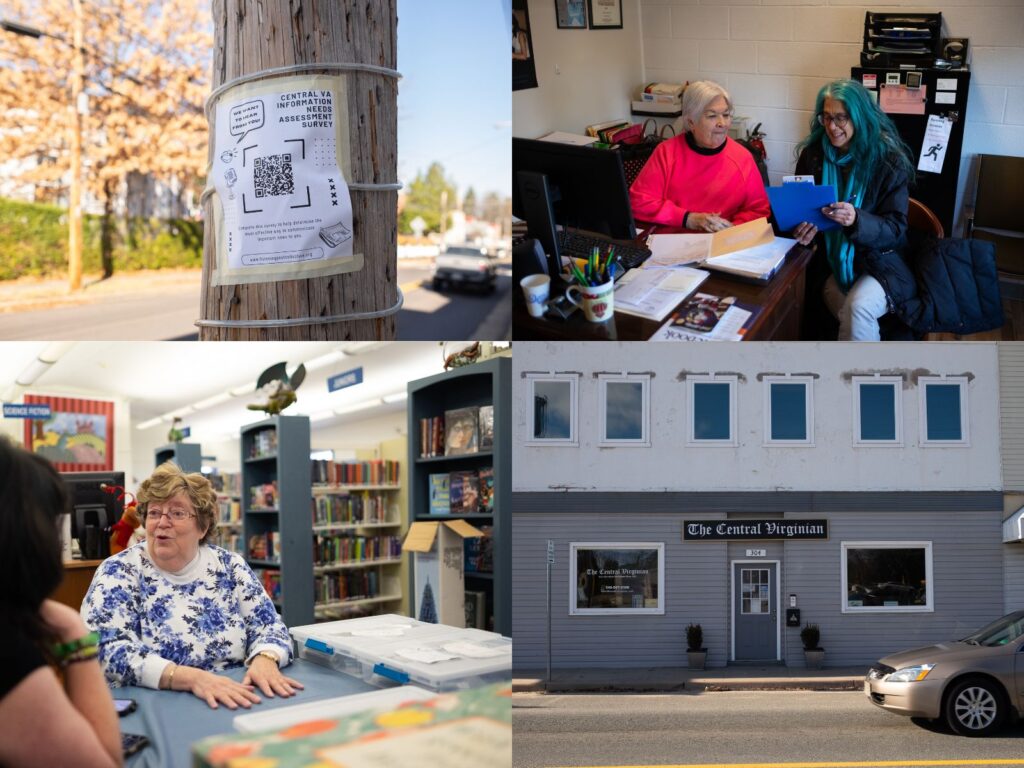
“Partnering with amazing local researchers in Fluvanna, Louisa, Nelson and Madison counties, we’ve listened on porches, in churches, at libraries, in coffee shops, and local folks have shared what’s missing and ideas they have for reconnecting their neighbors to the news they need,” said Hardman.
The study is only the beginning. Over the spring and summer of 2026, The Local News Listening Tour will have “tour stops” in Fluvanna, Louisa, Madison and Nelson counties. The event series will bring people together to discuss local news needs in central Virginia. You can submit your email to sign up for updates.
“We see local news as essential community infrastructure that keeps central Virginians informed, connected and engaged. It impacts the many important issues that affect our region — from housing to education to economic opportunity — and helps us all make decisions about our daily lives and the future of our communities,” said Eboni Bugg, director of community investment at the Charlottesville Area Community Foundation.
Charlottesville Inclusive Media partners Charlottesville Tomorrow, Vinegar Hill Magazine and In My Humble Opinion radio show will keep helping build local news and information for everyone in central Virginia, while acknowledging the innovative and nimble ways community members have filled the gaps. We’ll see you on the listening tour!